

There are many different types of headaches, and understanding their symptoms and causes is the first step towards finding appropriate treatment. From tension headaches and migraines to cervicogenic (neck-related) headaches, identifying the type of headache you’re experiencing can help you understand which treatments may be most effective.
At Turramurra Sports & Spinal Physiotherapy, we help patients across Turramurra and Sydney’s Upper North Shore manage headaches, particularly those associated with neck pain, stiffness and musculoskeletal conditions.
What are the five common headache types?
- Tension-type headache: Pressing or tightening discomfort, often on both sides of the head.
- Migraine: A neurological condition often involving throbbing pain, nausea and sensitivity to light or sound.
- Cervicogenic headache: Head pain referred from structures in the neck, sometimes worsened by neck movement.
- Cluster headache: Very severe, short attacks usually centred around one eye.
- Sinus-related headache: Facial pressure associated with sinus inflammation; migraine is frequently mistaken for sinus pain.
Headache disorders are classified internationally using the International Classification of Headache Disorders (ICHD-3), published by the International Headache Society.
1. Tension-type headaches
Tension-type headaches commonly feel like a tight band around the head. Pain is usually mild to moderate, pressing rather than throbbing, and may accompany tenderness in the neck and shoulders.
Common symptoms and contributors
- Pain on both sides of the head, forehead or temples
- Tightening pressure that may last hours or longer
- Stress, fatigue, poor sleep and sustained work positions may contribute
Can physiotherapy help?
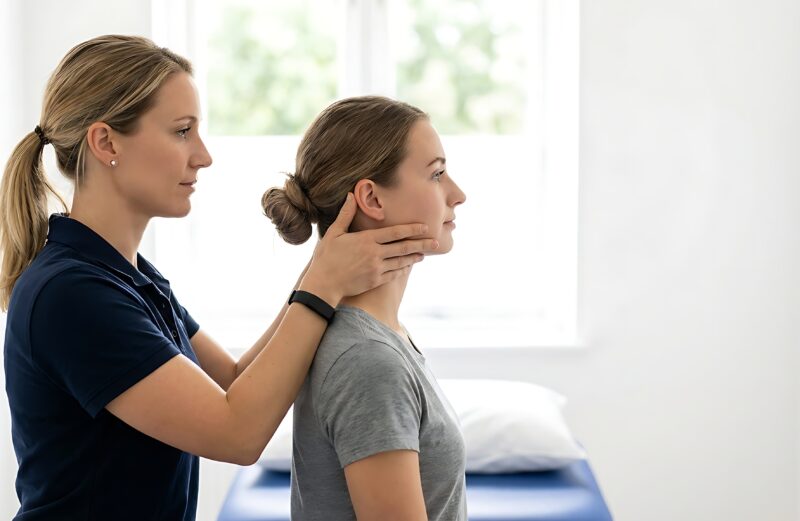
If neck discomfort or movement restrictions accompany your headache, a physiotherapist may assess neck and shoulder mobility, strength and work habits. Treatment may include exercises, movement breaks, ergonomic advice and selected hands-on techniques. Not every tension headache originates in the neck.
2. Migraine
Migraine is a neurological condition, not simply a severe tension headache. Attacks often last 4–72 hours and may involve throbbing pain, nausea, vomiting and sensitivity to light or sound. Some people experience an aura, such as temporary visual changes or tingling; many do not.
Common triggers and management
Possible triggers include sleep changes, missed meals, dehydration, stress, hormonal changes and sensory stimuli. A headache diary can help identify individual patterns. Medical treatment, including migraine-specific medication when indicated, is central to management. Physiotherapy may complement this care when neck pain or muscular problems coexist, but it does not replace migraine treatment.
3. Cervicogenic headaches: when pain comes from the neck
A cervicogenic headache is caused by a disorder involving the cervical spine. Pain may begin at the base of the skull and travel towards the temple, forehead or behind an eye. It is often one-sided and can worsen with certain neck movements or sustained positions.
Clues your headache may be neck-related
- Reduced ability to turn or move the neck
- Head pain reproduced or aggravated by neck movement
- A history of neck injury or symptoms after prolonged neck loading
- Headache occurring with neck or upper shoulder discomfort
Physiotherapy assessment may include neck mobility, joint sensitivity, muscle function and daily activities. Depending on findings, treatment may combine targeted neck and upper-back exercises, education and manual therapy. Results vary, and a diagnosis should not be made from symptoms alone.
4. Cluster headaches
Cluster headaches cause exceptionally severe pain, typically around one eye, in attacks lasting about 15–180 minutes. The eye may water or redden, the eyelid may droop, and the nose may run or feel blocked on the same side. Restlessness is common. Attacks can occur in repeated cycles.
These headaches require medical diagnosis and specific treatment, which may include prescribed triptans, oxygen and preventive medication. Massage or physiotherapy is not a primary treatment for cluster headache.
5. Sinus-related headaches
Inflammation of the sinuses can produce facial pain or pressure around the cheeks, nose and forehead, often alongside nasal symptoms. However, migraine is commonly mistaken for a sinus headache, including when congestion or watery eyes are present.
A doctor can assess whether sinus infection, allergy or another cause is responsible. Treatments may include saline rinses and appropriate nasal or allergy medicines. Antibiotics are not required for every sinus infection. Physiotherapy is not a substitute for treatment of sinusitis.
Can posture or screen time contribute to headaches?
Prolonged sitting, looking down and limited movement can aggravate neck discomfort in some people. There is no single perfect posture that prevents headaches. Comfortable workstations, regular changes of position and appropriate strength and mobility are more useful than rigidly holding one position.
Practical steps to help manage recurring headaches
- Keep a diary of headache timing, location, severity, associated symptoms and possible triggers.
- Maintain consistent sleep, regular meals and adequate hydration.
- Build up regular physical activity appropriate for your health and symptoms.
- Take breaks from sustained positions and adjust your workspace for comfort.
- Seek assessment if headaches recur, change or interfere with daily life.
When should you seek urgent medical attention?
Call emergency services for a sudden, explosive or unusually severe headache, or a headache with new weakness, difficulty speaking, confusion, collapse, sudden vision loss or fever with marked neck stiffness. Seek prompt medical advice for new or progressively worsening headaches, headaches during pregnancy or after childbirth, or headaches associated with cancer, immune suppression or head injury.
Frequently asked questions
How do I know if my headache is coming from my neck?
Neck-related headaches may worsen with neck movement, start near the base of the skull and occur with restricted neck mobility. A professional assessment is needed to distinguish them from migraine and other causes.
What is the difference between migraine and tension headache?
Migraine commonly involves nausea and sensitivity to light or sound, often with throbbing pain. Tension-type headache more often feels like pressing or tightening on both sides. Symptoms can overlap.
Can neck pain cause headaches every day?
Neck disorders can contribute to frequent headaches, but daily headache has several possible causes and deserves clinical assessment.
Does massage help headaches?
Massage may ease associated muscle discomfort or stress for some people. Its effects depend on the headache type and it does not replace indicated medical care.
Should I see a doctor or physiotherapist?
See a doctor for new, changing, severe or unexplained headaches. Physiotherapy may help when neck stiffness, movement or musculoskeletal factors are involved. Both may be useful.
Headache physiotherapy in Turramurra
At Turramurra Sports & Spinal Physiotherapy, we take time to understand your symptoms and assess whether neck joints, muscles or movement patterns may be contributing. Where appropriate, we develop a personalised plan involving education, exercise and hands-on care, and recommend medical review when needed.
Physiotherapy can help manage certain types of headaches, particularly those originating from the neck.
We welcome patients from Turramurra and surrounding Upper North Shore suburbs including Wahroonga, Warrawee, Pymble, St Ives and Gordon.
Clinic website and appointment enquiries — https://turramurraphysiotherapy.com.au/
Headaches and migraines service information — https://turramurraphysiotherapy.com.au/headaches-migraines/
Cervicogenic headaches information — https://turramurraphysiotherapy.com.au/cervicogenic-headaches/
To discuss recurring headaches or neck-related symptoms, contact Turramurra Sports & Spinal Physiotherapy to arrange an assessment via phone on 9144 1510 or by visiting our website and Click on Book an Appointment at https://turramurraphysiotherapy.com.au/
Medical disclaimer: This article is general information and is not a substitute for personalised medical advice. Seek urgent care for concerning symptoms.
Clinically reviewed by: Paul McLoughlin, Titled Musculoskeletal Physiotherapist
Clinical review date: 11 October 2026


