
Balance training benefits people of all ages by improving stability, mobility, and coordination. At Turramurra Physiotherapy, we see the difference firsthand. Whether you’re a senior looking to reduce fall risk or recovering from injury, the right balance program can significantly enhance your everyday function and safety.
Why Is Balance Important?
Balance is the foundation of nearly every movement we perform. From standing and walking to bending or reaching, our ability to remain stable directly impacts our mobility and confidence. When balance declines—often due to aging, injury, or neurological conditions—the risk of falling increases.
Balance issues don’t stem solely from weak muscles. They also involve the body’s sensory systems: the inner ear (vestibular system), vision, and proprioception (awareness of body position). Effective balance training helps these systems work together more efficiently.
Balance Exercises for Seniors: Small Steps, Big Impact
Balance exercises for seniors are among the most studied and effective interventions for reducing fall risk
For older adults, simple routines like:
- Single-leg stands (30 seconds per leg)
- Tandem walking (heel-to-toe)
- Standing on foam with eyes closed
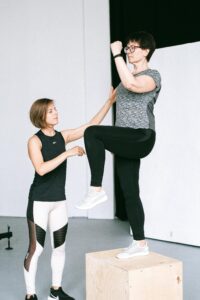
…can lead to noticeable improvements. Adding tasks like tossing a ball while standing on one leg increases challenge and promotes better coordination. The key is consistency: aim for 2–3 sessions per week, progressing difficulty over time.
Improve Balance and Coordination with Progressive Training
A well-structured balance program can improve balance and coordination across the lifespan. In younger individuals, seven weeks of task-specific exercises have been shown to increase one-leg stance time by up to 31%. For athletes or active individuals recovering from injury, training on unstable surfaces or using dynamic movements supports both proprioception and motor control.
For best results, studies recommend:
- Training 3 times per week
- Sessions lasting 31–45 minutes
- Programs running for 11–12 weeks
This dose-response relationship ensures the body adapts to the challenge, yielding measurable outcomes in functional tasks like walking speed and turning agility.
Physiotherapy for Balance Issues: Individualized and Effective
Physiotherapy for balance issues goes beyond basic exercises. At Turramurra Physiotherapy, we assess the root cause—whether it’s related to the vestibular system, joint instability, or muscular imbalances—and build a personalised plan.
Functional-task training, such as reaching, stepping, and turning during simulated daily tasks, has been found to outperform strength training alone for improving balance in older adults. For individuals with chronic ankle instability, balance training can improve reach distances by 5–18%.
We integrate core strength, dual-task activities, and real-world movement patterns to help patients achieve meaningful improvements, not just in the clinic but in everyday life.
Common Misconceptions About Balance Training
Many people believe balance training is only for seniors or that age-related balance loss is irreversible. The research tells a different story. Improvement is possible at any age, and consistent training leads to better results.
Other myths include:
- “Unstable surfaces are enough.” In reality, task-specific and progressive programs are more effective.
- “It’s too late to start.” Balance can improve at any stage of life with structured guidance.
- “I just need stronger legs.” Balance involves the brain, inner ear, and visual systems too.
Understanding these misconceptions helps patients embrace training that truly works.
How to Start Balance Training: Actionable Tips
Not sure where to begin? Here are evidence-based steps you can take:
- Frequency: Start with 2–3 sessions per week.
- Duration: Aim for 36–40 sessions over 11 weeks.
- Exercises: Incorporate single-leg stances, tandem walks, and foam surface training.
- Progression: Add dual-tasks (e.g., ball toss while balancing).
- Track Progress: Use the one-leg stance test (>30 seconds) or Timed-Up-and-Go (<12 seconds) as benchmarks.
If you’re unsure about what exercises suit your needs, a physiotherapist can help tailor the right plan.
Ready to Improve Your Balance?
Whether you’re recovering from an injury or simply want to move with more confidence, balance training is a powerful tool. At Turramurra Physiotherapy, we design personalised programs based on the latest research and your specific goals.
Contact us today to schedule an assessment or book online. Let’s build your stability, step by step. This will also include a state-of-the-art balance assessment with our Kinetisense Risk of Falls assessment.


